



Functional Neurology Approach: Rebalancing the Brain and Nervous System for Optimal Bodily Function
Introduction: Unresolved Health Issues? The Root Cause May Be a “System Error” in Your Command Center
Are you struggling with chronic shoulder stiffness, stubborn back pain, tension headaches, unexplained dizziness, or autonomic imbalances like constant fatigue? Many of our clients have undergone extensive hospital tests—including MRIs, CT scans, and blood work—only to be told, “Everything looks normal. Let’s just wait and see.”
Perhaps you have tried massages, general physical therapy, routine chiropractic care, or acupuncture. While these treatments might bring temporary relief, the pain and discomfort often bounce back within a few days. Living in a constant cycle of temporary fixes and recurring symptoms can be incredibly frustrating.
Why do these symptoms remain so stubborn and keep returning?
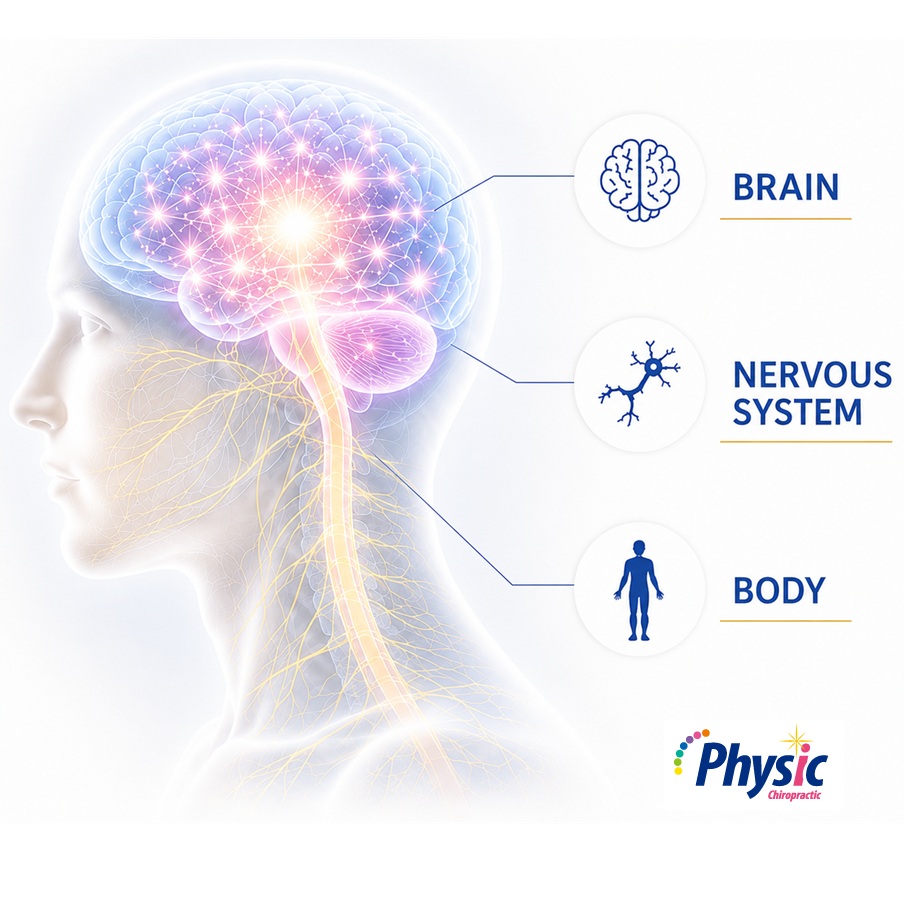
The answer rarely lies within the body’s physical “hardware” (muscles, bones, and joints) itself. Instead, it is often driven by a software system error within the brain and nervous system—the master control center that manages your body 24/7.
No matter how deeply you release a muscle or adjust a joint, if the brain keeps sending out a flawed signal, your body will instinctively snap back into its familiar, dysfunctional pattern of tension and misalignment.
At Physic, we utilize international WHO-standard chiropractic care as our core foundation and seamlessly integrate cutting-edge Functional Neurology, Applied Kinesiology (AK), Functional Medicine (Nutrition), and Visceral Manipulation. Moving away from traditional approaches that only chase local symptoms, we comprehensively evaluate and reboot your entire neural network.
Our muscles, joints, organs, hormones, and immune systems do not function in isolation; they are deeply interconnected and synchronized by the brain and nervous system. Rather than just managing the symptom, we look at how your brain perceives and guides your body, tapping into your nervous system’s innate capacity to heal and self-regulate.
1. What is Functional Neurology?
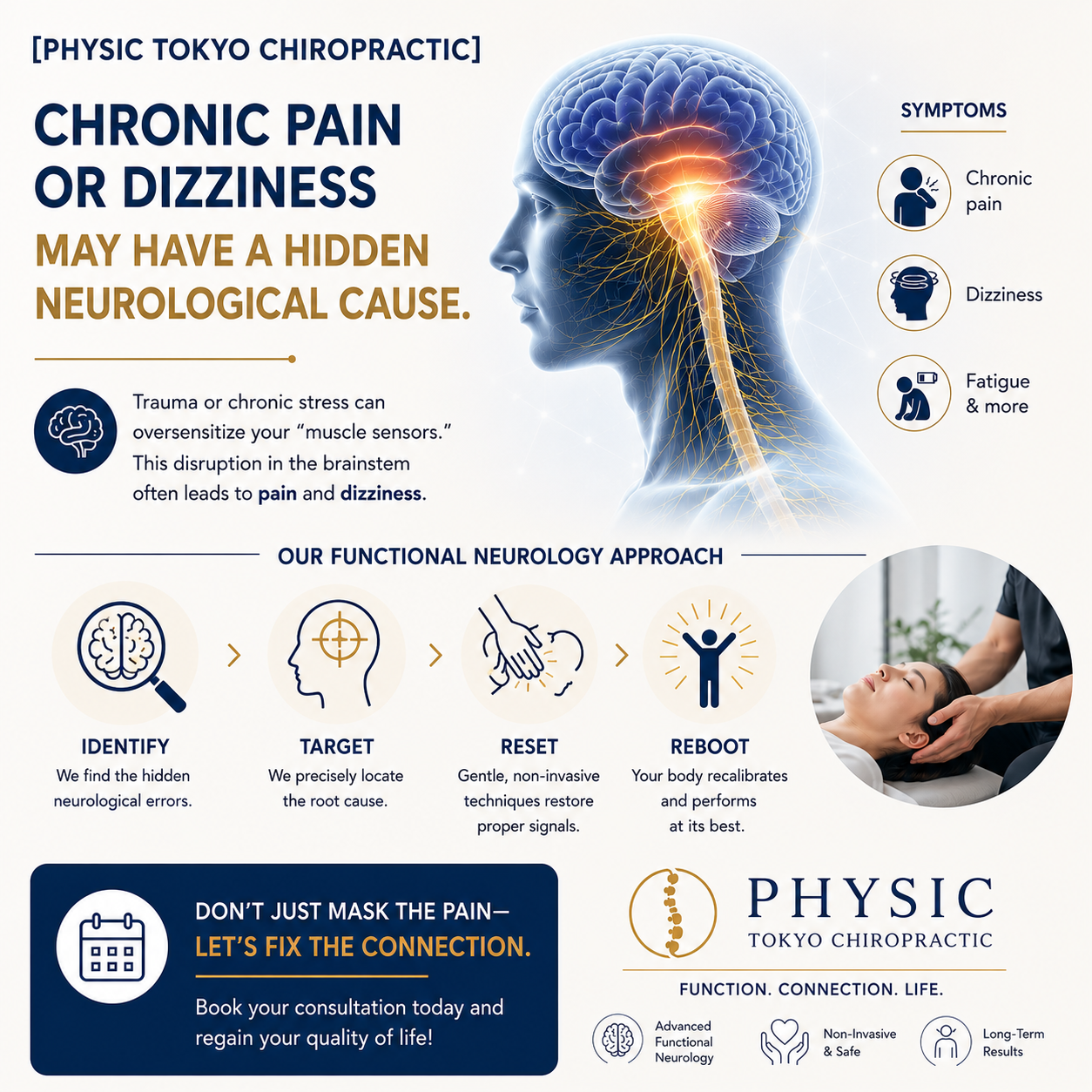
Focusing on “Software Bugs” Rather Than “Hardware Damage”
Functional Neurology is an advanced health care discipline that evaluates the “function” and balance of the brain and nervous system rather than looking for structural diseases.
Conventional medicine specializes in identifying physical, structural pathologies—such as brain hemorrhages, strokes, tumors, herniated discs, or fractures. These represent structural “hardware failures” that show up clearly on standard medical imaging like MRIs, CT scans, or X-rays.
In contrast, chronic conditions characterized by:
• “Normal” test results with no clear diagnosis
• Unexplained chronic pain
• Symptoms that have persisted for years despite multiple therapies
are frequently linked to a functional decline or a “bug” within the neural network that imaging scans simply cannot capture.
This does not mean your brain is physically damaged. Think of a high-end smartphone or laptop: the physical device (hardware) is completely pristine, yet an internal software glitch causes the system to freeze or run sluggishly. Because the device isn’t physically broken, an external camera photo (like an MRI) will show no abnormalities. Functional Neurology aims to map out these hidden software errors and utilize targeted sensory stimulation to upgrade your neural processing back to its optimal state.
When Information Integration Misses the Mark
Every second, your brain processes billions of signals through a vast neural network. To manage your body perfectly, the brain relies on precise, millisecond-by-millisecond sensory input from five primary pathways:
- Visual Input: Information from your eyes tracking your environment and relative position.
- Vestibular Input: Balance sensors inside the inner ear tracking gravity, head tilts, and rotation.
- Proprioceptive Input: High-precision sensors inside your muscles and joints reporting length and angles.
- Tactile Input: Skin pressure and touch sensors, such as weight distribution on the soles of your feet.
- Visceral Input: Internal signals monitoring heart rate, breathing, and digestive organ movement.
Your brain calculates this massive influx of data and executes an optimal “output”—such as maintaining a straight posture, producing smooth movements, or regulating autonomic functions.
However, if you have experienced a traffic accident (whiplash), a sports injury, surgical scar tissue, prolonged emotional stress, chronic sleep deprivation, or systemic nutritional imbalances, your nervous system’s sensory signals can become noisy and distorted. When input is compromised, the brain miscalculates, producing flawed output commands. This manifests as poor posture, chronic muscle over-activation, joint instability, heightened pain sensitivity, and autonomic issues like insomnia and chronic fatigue.
2. How “Brain Function” Reshapes the Body
Muscles Are the Execution Unit; the Brain is the Master Commander
When we feel discomfort, we naturally focus on the local area, assuming a muscle is simply tight or a joint is out of place. However, from a neurophysiological standpoint, a muscle cannot contract, shorten, or become stiff on its own accord.
Muscle tone and tension are completely determined by electrical commands descending from the brain.
An execution pattern originates in the brain (cortex, brainstem, and cerebellum), travels down the spinal cord, and reaches the muscles via peripheral nerves. If the commander-in-chief continues to issue an erroneous directive—such as “maintain high tension here” or “tilt the body to the left”—massaging the local tissue will only provide fleeting relief. The moment you step out of the treatment room, the body will realign itself with the brain’s baseline program.
At Physic, our clinical approach looks past the local muscle tension to evaluate the deeper tiers of the nervous system:
- Cerebellum: Manages movement precision, coordination, and postural prediction.
- Brainstem: Regulates eye movements, breathing, heart rate, and autonomic balance.
- Cerebral Cortex: Integrates conscious movement, sensory perception, and cognitive processing.
- Vestibular System: Processes gravity and equilibrium, establishing the body’s internal orientation.
- Eye Movements: Directly reflects brainstem and cortical processing speed and symmetry.
- Proprioceptors: Transmit continuous data regarding joint angles and muscle lengths.
- Autonomic Nervous System: Governs the shifting between fight-or-flight and rest-and-digest states.
By assessing and restoring harmony across these neurological pathways, we help you break free from chronic pain and build a sustainable foundation for movement.
3. Why Does Neurological Integrity Decline? (Neuroplasticity)
The Mechanism of Neural Adaptability
The human brain is not a rigid, unchangeable organ that simply deteriorates over time. Modern neuroscience has proven that the brain possesses a lifelong ability to forge new neural pathways, reorganize its structure, and adapt based on environmental inputs and experiences. This lifelong capacity is called Neuroplasticity.
Neuroplasticity allows us to master a new sport, learn a language, and adapt to positive environments. When we feed the brain accurate, healthy sensory feedback, our neural pathways become highly synchronized and efficient.
Maladaptive Learning and Compensation
However, neuroplasticity is a double-edged sword. If the nervous system is subjected to chronic stress, abnormal mechanics, or traumatic inputs, the brain will adapt to these negative signals, eventually learning and memorizing the dysfunctional state as its “new normal.”
The following events frequently warp sensory feedback, paving the way for negative neuroplastic adaptations:
- Whiplash from motor vehicle accidents
- Sports injuries (severe sprains, direct impacts, or ligament tears)
- Deep emotional stress or psychological trauma
- Physical shock from sudden falls
- Surgical incisions leaving behind tethered scar tissue (fibrous adhesions)
- Years of repetitive desk work and prolonged visual strain
- Chronic sleep deprivation and nutritional deficiencies
- Low-grade systemic inflammation
When these inputs persist, the brain subconsciously adopts protective guard patterns and compensatory movements. Long after the original tissue injury has completely healed, the brain’s hard drive can remain locked in a defensive mode, manifesting as chronic pain, poor movement mechanics, and autonomic dysregulation.
At Physic, we focus on breaking these maladaptive neural loops, introducing accurate sensory inputs to guide your brain back to its natural, healthy equilibrium.
4. The Loop of Recurring Symptoms
The Persistence of Learned Motor Patterns
Many individuals note that while deep tissue work or joint manipulation makes them feel lighter initially, their body reverts to the old, painful state within a few days. While addressing local joint mechanics is crucial, if the brain retains a learned, dysfunctional motor pattern, it will use its immense regulatory power to return the body to its skewed baseline.
Consider a person with a chronic forward-head posture. This isn’t just a case of shortened chest muscles; the brain has mapped this specific alignment as its mid-line reference point. Even if the local tissue is stretched, the brain will continuously fire down signals to re-engage that exact protective posture. This is why chronic neck, shoulder, and back issues can become so deeply entrenched.
Sensory Mismatch and Neural Feedback Loops
Your brain requires harmonious, coherent data to operate efficiently. It maps out daily choices by cross-referencing information from multiple internal sensors:
- Joint alignment and position feedback
- Muscle spindle length and tone
- Plantar pressure feedback from the soles of your feet
- Visual spatial coordinates
- Vestibular balance coordinates
- Breathing rhythms and visceral status
If past trauma introduces a persistent error into this network, the puzzle pieces no longer match. The brain experiences sensory conflict and is forced to navigate the body using skewed data, resulting in:
- Localized mechanical overload on specific joints
- Compensatory movement patterns that guard against movement
- Persistent muscle bracing and tightness
- Loss of intrinsic joint stability
- An over-reactive, easily exhausted autonomic nervous system
By analyzing how your brain integrates these inputs, we work to clear out the underlying sensory conflicts rather than just chasing the physical compensation.
5. Physic’s Five-Dimensional Evaluation Lens
We do not view your body as a collection of separate parts. We approach the brain, peripheral nerves, musculoskeletal system, internal organs, and autonomic pathways as a single, unified loop. Our practice focuses on five core pillars:
① Neurological Mapping (Neuromapping)
Effective care relies on locating where information processing is breaking down. At Physic, we run functional tests to measure the integrity of your sensory-motor pathways:
- Postural symmetry and structural center-of-mass shifts
- Dynamic gait analysis (gait mechanics, arm swing, foot strike)
- Static and dynamic balance parameters
- Comprehensive oculomotor (eye movement) tracking
- Segmental joint mechanics and range of motion
- Muscle coordination and activation timing
- Cranial nerve performance screening
- Manual Muscle Testing (MMT) based on Applied Kinesiology principles
Within this framework, manual muscle testing is not used to see how strong a muscle is in isolation. Rather, it serves as a real-time neurological window to see how effectively the central nervous system processes sudden resistance. This mapping helps us deduce which pathways are down-regulated so we can select the appropriate clinical inputs.
② Targeted Central Nervous System Activation
Different areas of the brain manage distinct tasks to keep our movements effortless and automated:
- Cerebellum: Fine-tunes balance, regulates smooth motion, and matches motor intent with reality.
- Brainstem: Commands autonomic pathways, triggers eye movements, and houses essential life centers.
- Cerebral Cortex: Directs conscious movement, processes sensory input, and coordinates higher cognition.
If a functional asymmetry develops between the left and right sides of these structures, it can disturb postural muscle tone, leading to persistent dizziness, unsteadiness, guarded neck and shoulder muscles, or diminished athletic performance. We use precise chiropractic adjustments, tailored eye movement drills, and localized vibrational inputs to provide the exact sensory feedback required to stimulate under-active neural pathways.
③ Autonomic Balance Regulation
A common thread among individuals dealing with long-standing discomfort is a shifted autonomic nervous system—frequently locked into a state of heightened sympathetic dominance (fight-or-flight). Your autonomic pathways manage respiration, heart rate, blood pressure, digestion, sleep tracking, and temperature control.
When the brainstem’s regulatory control dampens, the shift between activation and recovery loses its fluidity. Your body remains hyper-vigilant, which can impair digestive motility, disrupt deep sleep, and slow down natural tissue recovery. We monitor your postural breathing rhythms, cranial nerve outputs, and orthostatic vitals (blood pressure and heart rate changes upon standing) to evaluate your autonomic adaptive capacity and build care that supports natural self-regulation.
④ Resolving Trauma and “Injury Memories”
It is common to meet individuals who say, “My bones healed completely after the accident years ago, but the area has never felt right since.” This often points away from structural tissue damage and toward a nervous system that has memorized the exact moment of impact, leaving a protective flexor-withdrawal reflex pattern active.
In Functional Neurology and AK, we analyze how your neural loops hold onto past physical trauma. We review your health history, assess old injuries or surgical scar tissue, and utilize precise mechanical and proprioceptive inputs (such as Injury Recall Techniques) to help quiet the nervous system’s defensive guard patterns, allowing you to move with greater ease.
⑤ Emotional Stress and Nervous System Interaction
Modern neuroscience demonstrates that persistent emotional stress, cognitive overload, and historical trauma can significantly alter your brain’s pain matrix and amplify your autonomic responses.
- Demanding professional deadlines or chronic overwork
- Ongoing interpersonal strain at home or work
- Deep personal losses or sudden life transitions
- The lingering fear following a major accident or illness
These stressors can keep the brain’s survival networks (such as the amygdala) in a state of high alert. Over time, this heightened state can lower your threshold for physical discomfort, making old, healed tissues feel sensitive, tight, or painful. We assess your physical well-being alongside your structural and environmental history, utilizing gentle neuro-vascular point contact and AK principles to help soothe an over-stimulated nervous system.
6. Why We Pair Applied Kinesiology with Functional Neurology
Balancing the Triad of Health
The core philosophy at Physic relies on pairing Functional Neurology with the systematic clinical logic of Applied Kinesiology (AK). AK looks at health through a three-sided lens known as the Triad of Health, which balances Structure (muscles and joints), Chemistry (nutrition and metabolic function), and Mental/Emotional factors (stress and meridian pathways).
Uncovering the Primary Trigger
When a muscle tests as under-active or weak during an assessment, AK prompts us to trace the root cause across multiple body systems rather than assuming the muscle itself is damaged. An inhibition signal can travel through several interconnected pathways:
- Structural mechanical limitations or joint fixation in the spine
- Visceral-somatic reflexes driven by digestive stress or organ fatigue
- Lingering neural feedback loops from an old injury
- Systemic chemical, metabolic, or nutritional deficiencies
- Heightened stress loading affecting neurological meridian pathways
By using functional muscle assessments as a dynamic feedback loop, we can evaluate how these different areas interact and determine the primary area requiring attention, ensuring your care is both efficient and focused.
7. The Body as a Connected System
While modern medicine is divided into highly essential specialties—such as orthopedics, neurology, gastroenterology, and cardiology—our internal physiology recognizes no such boundaries. Every tissue, muscle, and organ communicates continuously through our neural pathways.
Consider how a simple functional shift can cascade through the nervous system:
Dietary stress or prolonged worry impacts gut motility -> Triggers a visceral-somatic reflex that alters core activation -> The body compensates by shifting into a protective, rounded posture -> Shuts down optimal diaphragmatic breathing -> The brain stem senses altered oxygenation and ramps up sympathetic fight-or-flight drive -> Elevates upper motor neuron tone, causing chronic neck tension and tension headaches -> Impairs restorative deep sleep, slowing down the body’s natural recovery.
A minor shift in one system can ripple through the entire neural network. Because of this, we look beyond the isolated point of pain to map out and address the primary driver of your symptoms.
【Understanding Hemisphericity: An Imbalance Between the Left and Right Brain】
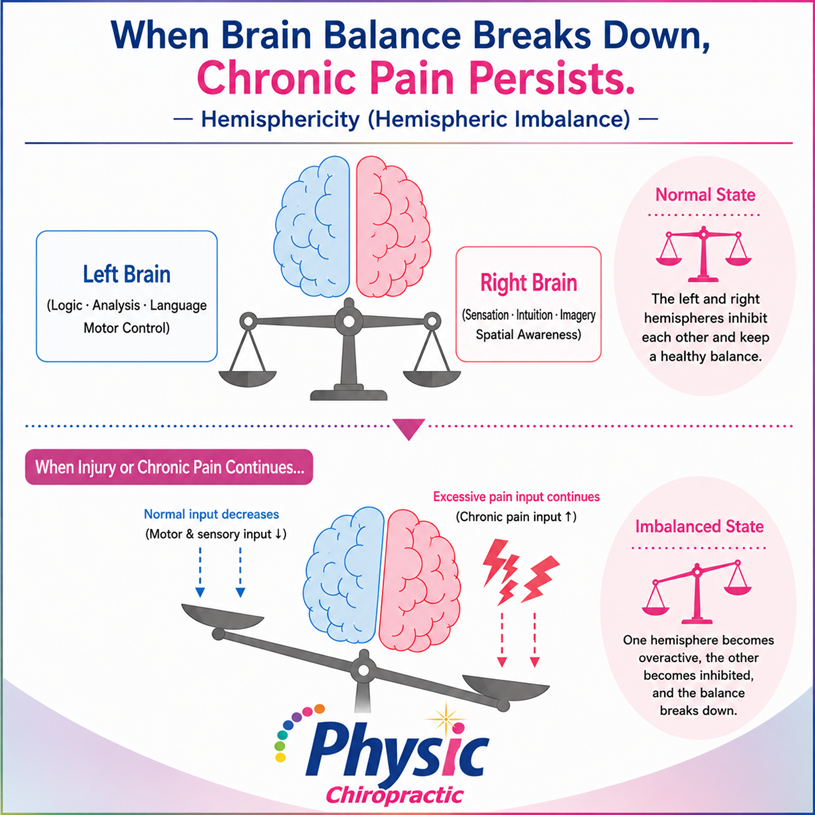
In functional neurology, one of the most critical concepts we evaluate is “Hemisphericity” (a functional asymmetry or imbalance between the left and right cerebral hemispheres).
The human brain functions at its best when the left and right hemispheres work in harmony, mutually inhibiting and balancing each other like a finely tuned scale.
However, when a severe injury occurs on one side of the body, leading to chronic pain or CRPS (Complex Regional Pain Syndrome), this delicate balance is disrupted. For example, an injury to the right foot causes a continuous flood of excessive pain signals to the opposite side—the left hemisphere. At the same time, because the injured limb cannot be moved properly, normal healthy movement signals (motor inputs) are drastically reduced.
When this un-physiological state persists, it leads to a profound functional disconnection and imbalance between the two sides of the brain.
【What Happens When the Brain’s Balance Is Disrupted?】
The cerebrum plays a vital role in regulating the autonomic nervous system, which controls our body’s “on/off” switches (the sympathetic and parasympathetic systems).
When the balance between the left and right hemispheres breaks down, the cerebral cortex loses its ability to properly inhibit the brainstem. As a result, the sympathetic nervous system can run wild (hyper-excitation).
The distinct and distressing symptoms commonly seen in CRPS patients are, in many cases, fundamentally caused by this error in the brain’s autonomic control center due to hemisphericity:
- Extreme coldness in the affected area (excessive blood vessel constriction caused by overactive sympathetic output)
- Conversely, extreme heat, redness, or purplish discoloration (loss of proper vascular control leading to dilation and congestion)
- Abnormal or excessive sweating
At Physic Tokyo, we do not simply focus on the local site of pain (such as the hand or foot). Instead, based on the principles of functional neurology, we thoroughly assess the functional asymmetry of the brain to reset the autonomic system’s errors at their source. If you are struggling with persistent pain, post-surgical discomfort, or autonomic symptoms after an injury, please feel free to consult with us.
8. Core Functional Neurological Screenings
To pinpoint exactly where your neural loops are experiencing communication errors, we select and combine several specialized assessments:
-
- Postural Analysis: Measuring structural center-of-mass shifts and head-on-neck positioning to evaluate brainstem-driven postural muscle tone.
- Gait Analysis: Observing your movement mechanics, arm swing symmetry, and foot strike pattern to assess real-time coordination between the cortex and the cerebellum.
- Oculomotor Assessment: Observing eye stabilization, rapid tracking (saccades), and slow pursuits to check the functional balance of your brainstem, cerebellum, and frontal lobes.
- Balance and Vestibular Screening (Romberg Testing): Measuring postural sway with eyes closed to evaluate how your inner ear balance centers and foot joint sensors interact with your cerebellum.
- Sensory-Motor Integration (AK Muscle Testing): Using manual muscle testing to see how fluidly your nervous system adapts to resistance and checking for signs of sensory integration errors.
- Autonomic Screening: Checking pupillary light endurance, breathing patterns, and blood pressure/heart rate variations during orthostatic positioning to evaluate your body’s stress adaptation.
9. Research and Neurophysiological Foundations
The goal of our approach is to evaluate sensory-motor integration, track nerve pathway balance, and introduce targeted inputs to support your body’s self-regulatory capacity. Contemporary neuroscientific research underscores that long-standing discomfort, balance issues, and autonomic dysregulation are deeply linked to altered central nervous system processing and neuroplastic adaptations.
Chronic Pain and Central Processing Shifts
Research demonstrates that when discomfort becomes chronic, it can lead to functional and structural changes within brain networks responsible for processing pain—including the anterior cingulate cortex (ACC), insular cortex, and primary somatosensory cortex. These changes can keep the brain hyper-aware of threat signals even after local tissues have healed (Jaffal SM, 2025 / Song Q, 2024).
Cervical Proprioception and Postural Control
Studies show that altered sensory feedback from the dense network of receptors in the upper neck can disrupt sensory-motor integration. This can directly impact head tracking, eye coordination, spatial orientation, and static balance metrics (Peng B, 2021 / Qu N, 2022 / Särkilahti N, 2024).
Vestibular Rehabilitation and Habituation
For individuals dealing with persistent unsteadiness or motion sensitivity, targeted movement-based vestibular exercises have been shown to help the brain adapt to conflicting balance signals, supporting better equilibrium and reducing spatial disorientation (Kamo T, 2023 / Edwards C, 2025).
Oculomotor Training and Autonomic Function
Clinical papers tracking mild traumatic brain injuries indicate that structured visual and gaze-stabilization drills can support recovery in tracking accuracy and help re-establish balanced neural pathways (Biscardi M, 2024). Furthermore, hand-delivered therapies have been shown to influence heart rate variability (HRV), a key marker used to track sympathetic and parasympathetic balance (Forte G, 2022 / Roura S, 2021 / Harper B, 2023).
The Dynamic Application of Manual Muscle Testing
Literature reviewing manual muscle testing notes that its reliability depends significantly on the clinician’s training, strict adherence to testing protocols, and overall experience (Conable KM, 2011 / Oliveira DG, 2022 / Soares JR, 2025). To ensure objectivity, we interpret muscle test outcomes alongside our structural screenings, vestibular tracking, and autonomic measurements.
*Disclaimer: The scientific literature cited above is intended to provide educational context regarding sensory-motor rehabilitation and functional assessments. It does not imply a guarantee of clinical outcomes for any specific medical condition.
10. Who is This Approach Designed For?
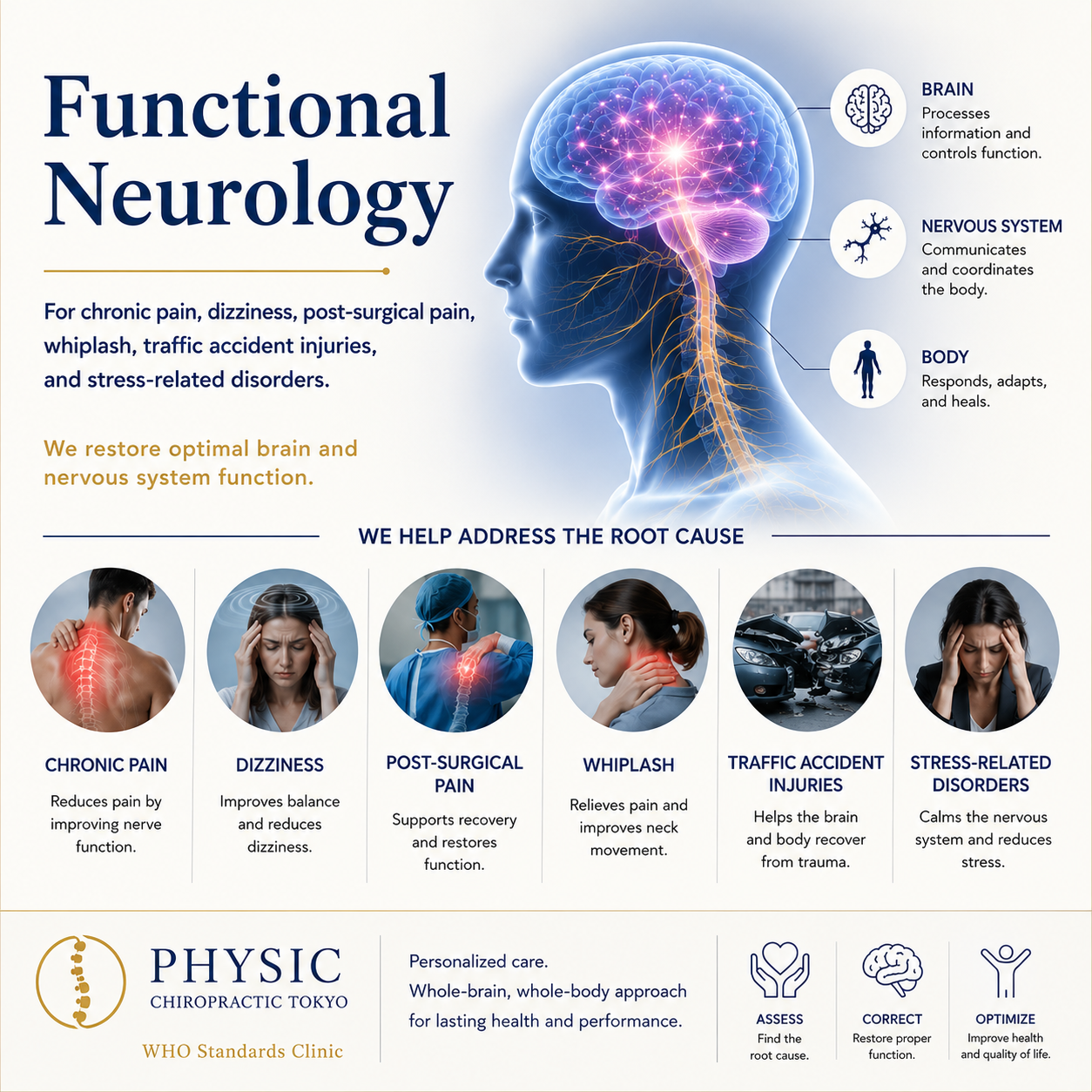
Our care is tailored for individuals seeking to resolve chronic, complex, or unexplained symptoms that have not responded well to traditional, localized treatments:
- Chronic Neck and Shoulder Stiffness: For those whose muscles lock back up into a tight knot shortly after a massage.
- Persistent Headaches and Migraines: For those whose comfort is easily disrupted by weather changes or stress, and who rely heavily on pain medication.
- Stubborn Low Back and Hip Discomfort: For those who experience structural tension when walking or sitting, despite normal spinal imaging.
- Dizziness, Vertigo, or Equilibrium Shifts: For those experiencing a floating sensation or unsteadiness, but whose ear and brain scans show no structural damage.
- Recurrent Sports Injuries or Movement Plateaus: For athletes who repeatedly experience sprains or muscle strains in the exact same location.
- Post-Traffic Accident Trauma (Whiplash): For those dealing with lingering neck soreness, nerve sensitivity, or a constant feeling of tension following an automobile collision.
- Complex Regional Pain Syndrome (CRPS) Tendencies: For those who experience burning pain, skin sensitivity, prolonged swelling, localized temperature shifts, or lingering inflammation after a fracture, sprain, or tissue injury.
- Post-Surgical Alterations and Tethered Tissue: For those who feel an internal tugging, tightness, or a shift in postural balance around old surgical incisions or scar tissues.
- Autonomic Dysregulation, Fatigue, and Sleep Interruptions: For those stuck in a state of high physical alert who wake up feeling unrefreshed and exhausted.
- Brain Fog and Focus Fatigue: For those who experience cognitive exhaustion and a clouded head, impacting daily productivity.






Every individual’s nervous system carries a completely unique history and wiring pattern. Complex conditions like traffic injuries or CRPS typically involve a nervous system that has become locked into a state of hyper-vigilance. We focus on mapping out your unique presentation, prioritizing safety, and creating a tailored care plan designed around your nervous system’s current capacity.
Let us help you update your neural pathways, step out of protective bracing patterns, and rediscover smooth, comfortable movement.
Treatment Fees
Price List (First Visit)
Initial Exam + Chiropractic Treatment + Functional Neurology
- Initial treatment fee includes a consultation and examination fee.
- The first visit typically takes approximately 40 to 50 minutes.
Price List (From the Second Visit Onward)
Duration: approx. 40-45 min / session
- Double or Triple-Slot Appointments Available depending on severity or condition.
- All prices above include tax.
For full price details, click here: https://physic.co.jp/price/
[Physic Chiropractic Tokyo / Ebisu]
- Address: #401 High-City II, 1-7-22 Hiroo, Shibuya-ku, Tokyo (A 7-minute walk from JR Ebisu Station)
- Phone: 03-6450-2365
- Email:info@physic.co.jp
*Our office operates strictly by appointment. Please contact us in advance to secure your session. English support is fully available.


